

1. Gain access to the sinus
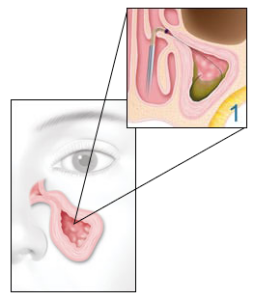 To gain initial sinus access, a sinus guide catheter is introduced into the nasal cavity to target the sinus ostia (opening that connects a sinus to the nasal cavity) under endoscopic visualization. A sinus guide wire or a sinus illumination system is introduced through the sinus guide catheter and gently advanced into the target sinus.
2. Inflate balloon across ostium
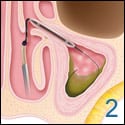
The sinus balloon catheter is introduced over the sinus guide wire or sinus illumination system and positioned across the blocked ostium. The position of the sinus balloon catheter is confirmed and the balloon is gradually inflated to open and remodel the narrowed or blocked ostium.
3. Remove balloon and irrigate sinus
 To gain initial sinus access, a sinus guide catheter is introduced into the nasal cavity to target the sinus ostia (opening that connects a sinus to the nasal cavity) under endoscopic visualization. A sinus guide wire or a sinus illumination system is introduced through the sinus guide catheter and gently advanced into the target sinus.
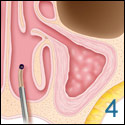
4. Remove system
 To gain initial sinus access, a sinus guide catheter is introduced into the nasal cavity to target the sinus ostia (opening that connects a sinus to the nasal cavity) under endoscopic visualization. A sinus guide wire or a sinus illumination system is introduced through the sinus guide catheter and gently advanced into the target sinus.